
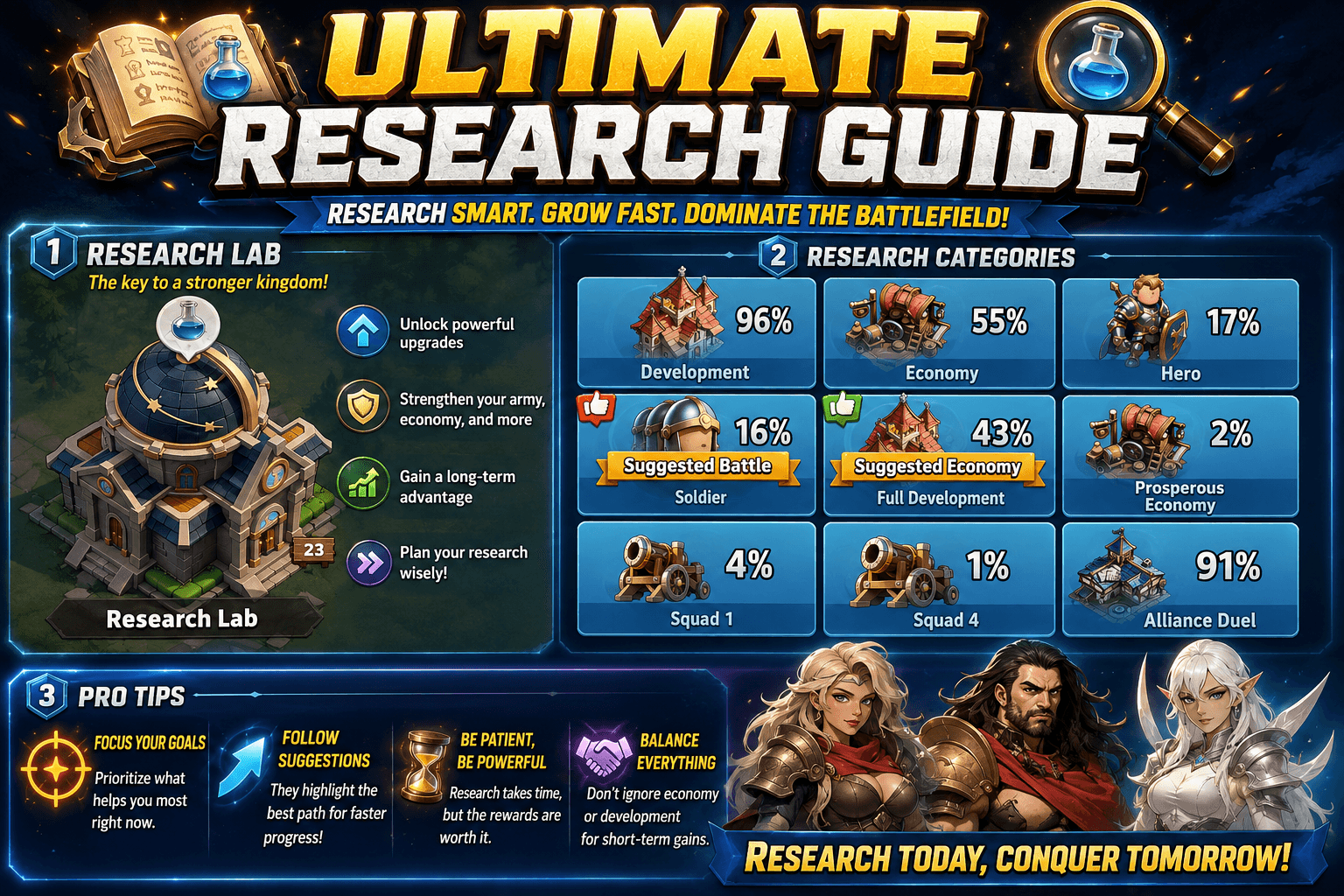

Short answer: In Last Asylum: Plague, open Development first, push troop tiers through Military, then Alliance Duel and Economy branches — skip caravan and late-game trees until your Sanctuary and Lab levels allow them.
You open the Research Lab, stare at 13 different trees, and have absolutely no idea where to start. Do you go troops first? Economy? Hero buffs? What even is Caravan Transport?
Most players just click whatever looks good and wonder later why their account feels weak despite "doing research." The truth is, Last Asylum's research system is generous — but only if you hit the right trees in the right order. Get it wrong and you've spent Study Scrolls that should have unlocked Tier 10 troops on caravan speed buffs.
This guide tells you exactly what each tree does, which ones matter, and the optimal order to work through them — whether you're F2P or spending. Pair it with top 5 beginner mistakes so you do not burn honor shop currency and shards on the wrong upgrades while your lab is still shallow.
First — Understand the Research Lab
Everything runs through the Research Lab. One lab, one research queue. There's a second lab available for a small premium purchase which gives you a second simultaneous queue, but it's genuinely optional — if you manage your scroll spending well, one queue is plenty.
What actually matters about the lab is its level. The deeper branches of several trees are gated behind higher lab levels, which are in turn gated by your Sanctuary level. This is another reason keeping Sanctuary upgraded is always the priority — it unlocks not just buildings, but research depth. For the full building priority stack, see fastest way to increase power.
Now, the 13 trees.
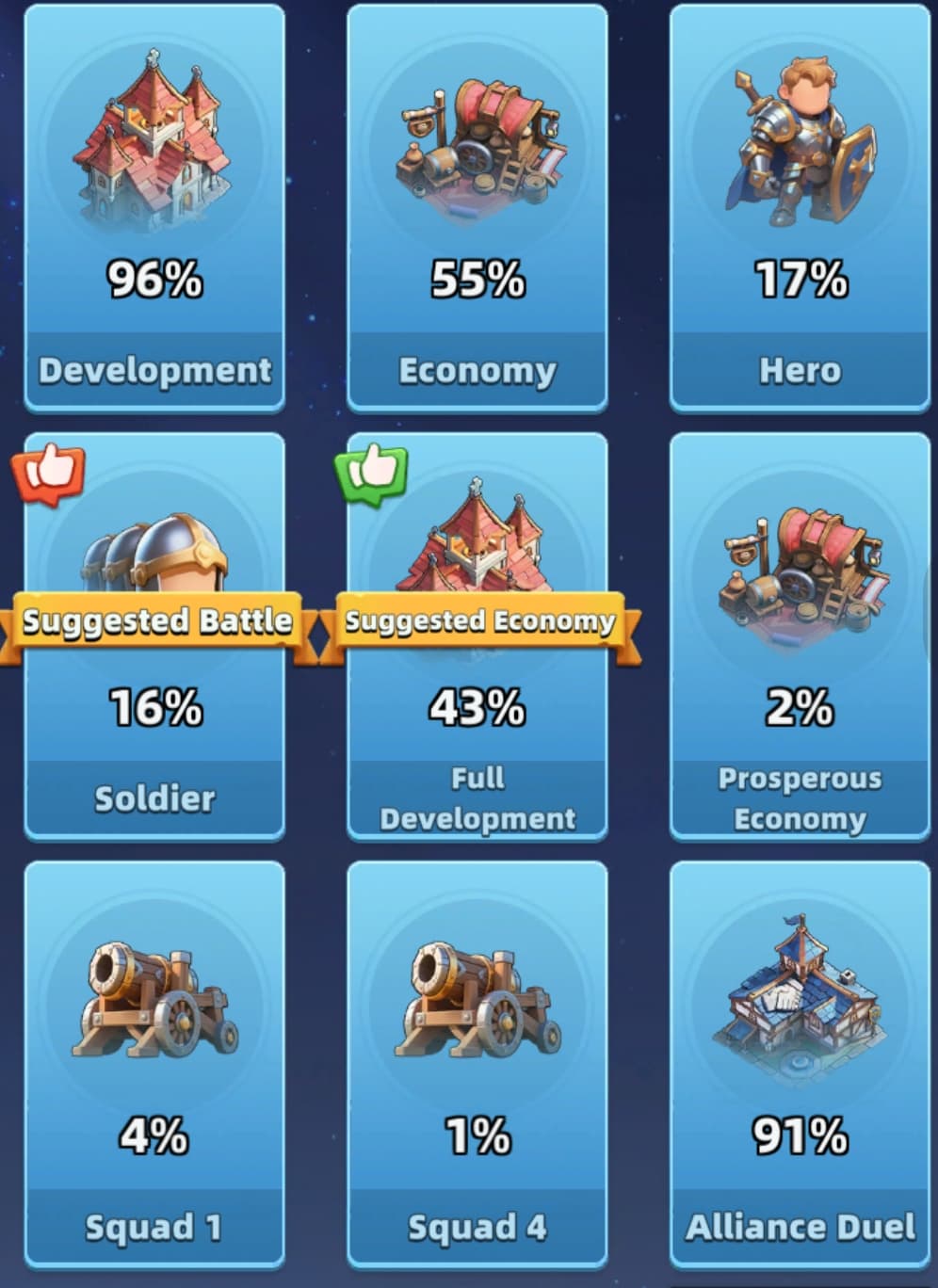 Last Asylum Research Lab — all 13 research trees with suggested Battle and Economy paths highlighted
The Research Trees That Actually Matter
Not all 13 trees are equal. Some are game-changing. Some are late-game unlocks you can barely touch yet. A few are almost irrelevant. Here's every tree, honest about what it does.
Development — Your First Stop
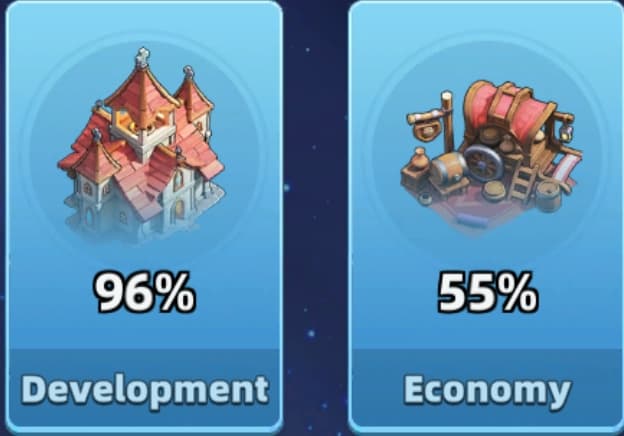 Last Asylum Development and Economy research progress — push Development first for build and train speed
Development is the first tree you should open and one of the last you'll stop investing in. It covers everything that makes your base run faster:
- Training speed (how fast soldiers roll out)
- Healing speed (how fast wounded troops recover in the Infirmary)
- Building construction speed
- Research speed
- Infirmary and Training Ground capacity
- Unlocking additional Training Ground slots
Three nodes in particular are worth prioritising above everything else in this tree.
Training Ground Unlock — More Training Grounds means more simultaneous troop production. Early in the game this feels minor. By mid-game, the difference between two Training Grounds and four is tens of thousands of troops per day.
Construction Master — Each level strips 5% off your building construction time. That sounds small until you're staring at a 14-day Sanctuary upgrade timer. Stack three or four levels of this and you're saving real time.
Research Speed nodes — These reduce how long every future research takes. Each level is 10% faster. Late-game research can take weeks; 20–30% off those timers is worth more than most other investments in this tree.
The rest of Development — healing speed, resource production, infirmary capacity — are good quality-of-life upgrades. Work through them as your scroll supply allows, but don't delay Alliance Duel research chasing minor infirmary improvements.
Economy — Choose Your Branch Carefully
Economy does two things: it improves resource income, and it's the only way to unlock extra Herb Garden slots outside of building them normally.
The tree splits into two clear directions, and the icons tell you which is which:
- Hand icon = Output (production from buildings inside your city)
- Hammer icon = Gathering speed (how fast your march returns from the world map)
Both are genuinely useful. But if you're trying to maximise resources per day, gathering speed wins over time.
Here's why: your in-city production is capped by building levels. Maxed Farm, maxed Lumberyard, maxed Herb Garden — there's a ceiling. Gathering speed has no ceiling. The faster your marches return, the more trips they complete per day, and the total resource gap between a player who invested in gathering and one who didn't becomes enormous by late game.
The exception: if you play a largely passive, city-based style with minimal world map activity, production upgrades are worth more to you personally. Know your playstyle.
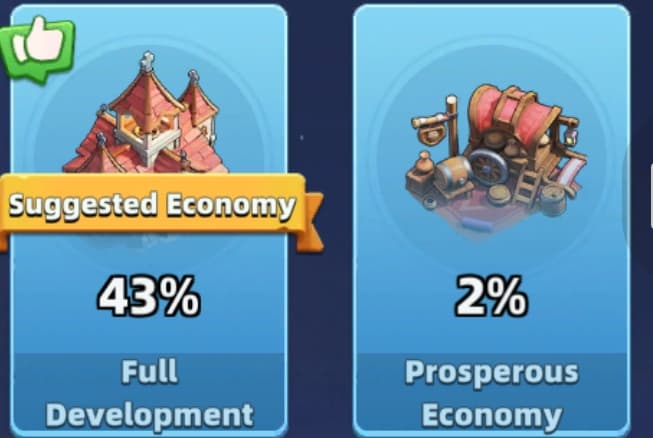 Last Asylum Full Development vs Prosperous Economy branches — follow Suggested Economy for gathering and Herb Garden slots
Hero Research — Match It to Your Squad
The Hero tree has three separate faction branches: Warrior, Ranger (Archer), and Warlock. Each gives attack, defence, and HP buffs to heroes of that faction.
The question players always ask is: which faction do I research first?
The answer is locked to your Squad 1 composition — and here's the mechanic that makes this matter.
The Faction Bonus System
Every squad has two hidden multipliers tied to faction composition:
- Faction counter — rewards you for concentrating heroes of the same faction
- Faction bonus — activates at 3 same-faction heroes, reaches maximum at 5
At maximum (5 heroes, same faction), your squad gets two stacked bonus tiers: extra damage dealt and a faction-specific multiplier. This is a significant combat advantage that most beginners leave on the table by mixing factions randomly.
The implication for squad building:
- Squad 1 (your main combat squad) should run 5 heroes of a single faction
- Research that faction's Hero tree node to amplify what those heroes already do
- Squads 2 and 3 are for gathering, support, and defence — they should also be single-faction but focused on defence/HP research, not attack
You have three factions and three squads. The cleanest setup is one faction per squad, all different. Warrior squad, Ranger squad, Warlock squad — each serving its role.
If your Squad 1 is mostly Rangers (Shadow, Marlena, Harper, Zoya are all Rangers), invest in the Ranger branch of the Hero tree. It stacks directly on top of their faction bonus. See how to level up heroes for squad investment order.
Soldiers — Start With March Size, Not Power
The Soldiers tree buffs your troops directly: attack, defence, HP, and load capacity.
Most players go straight for attack. That's the wrong call.
Load Training — which increases how many troops fit in a single march — should be your first investment here. It affects everything: more troops per attack means more damage, more troops per gathering march means more resources per trip, and more troops in a rally means you're actually contributing. Load Training is a force multiplier on every other thing you do with marches.
After that, pick your direction:
- Offensive player: invest in troop attack
- Defensive / gathering player: invest in defence and HP
There's no wrong answer on attack vs defence — that's genuinely about how you play. But skipping Load Training to get attack a level earlier is a mistake either way.
Squad Trees — Four Queues, Different Jobs
There are four Squad research trees, one per squad slot. They each have the same structure: attack vs cities, attack vs monsters, general squad attack, and attack when defending.
The logic is straightforward:
Squad 1 is your combat squad. Research all three attack types — general, vs cities, and when defending. You want this squad as strong as possible in every combat scenario.
Squads 2 and 3 are your support squads — mostly gathering and defence. Don't invest the same resources here. Focus on their defence and HP nodes instead. They're not the heroes of your attacks; they're the backbone keeping resources flowing.
Alliance Duel — The Tree Most Players Neglect
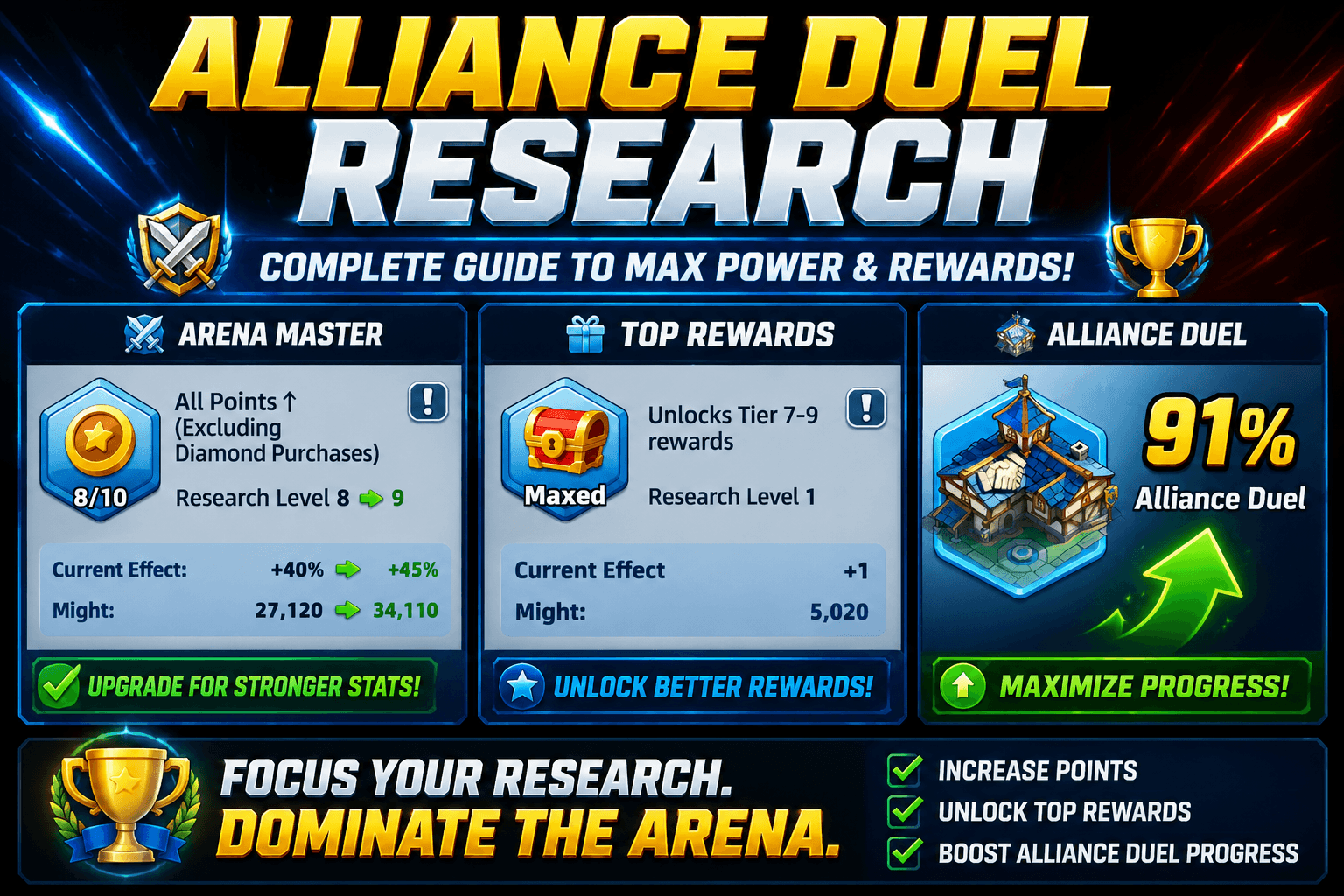 Last Asylum Alliance Duel research — Arena Master and Super Reward tiers unlock top chest Study Scrolls and UR shards
This is the tree that separates players who grow quickly from players who plateau.
Alliance Duel research exists to help you earn more from the Alliance Duel event. The reason it's so critical comes down to two specific unlocks:
Super Reward Level 1 — unlocks Tier 4–6 reward chests
Super Reward Level 2 — unlocks Tier 7–9 reward chests
Here's the thing: without Super Reward Level 1, you cannot open the Tier 4–6 chests. Not "they're harder to get" — you physically cannot claim them, even if you earned the points. Same for Level 2 and Tier 7–9. The rewards are behind a gate that only research opens.
Those top chests contain:
- Study Scrolls — the resource you need for all other research
- UR Hero Omni Shards — materials for upgrading your best heroes
- UR Epigraphs (SS quality)
- Up to 10,000 Diamonds
- Level 11 Gear components
- Speed-ups
This creates a loop that compound-grows your account: Alliance Duel research unlocks better chests → better chests give more Study Scrolls → more Study Scrolls fund the Elite Troop research you need for T10 → T10 unlocks the strongest troops in the game.
F2P players especially: rush Super Reward Level 1 and Level 2 before spending scrolls on anything else that isn't Development.
Elite Troop — The Endgame Gate
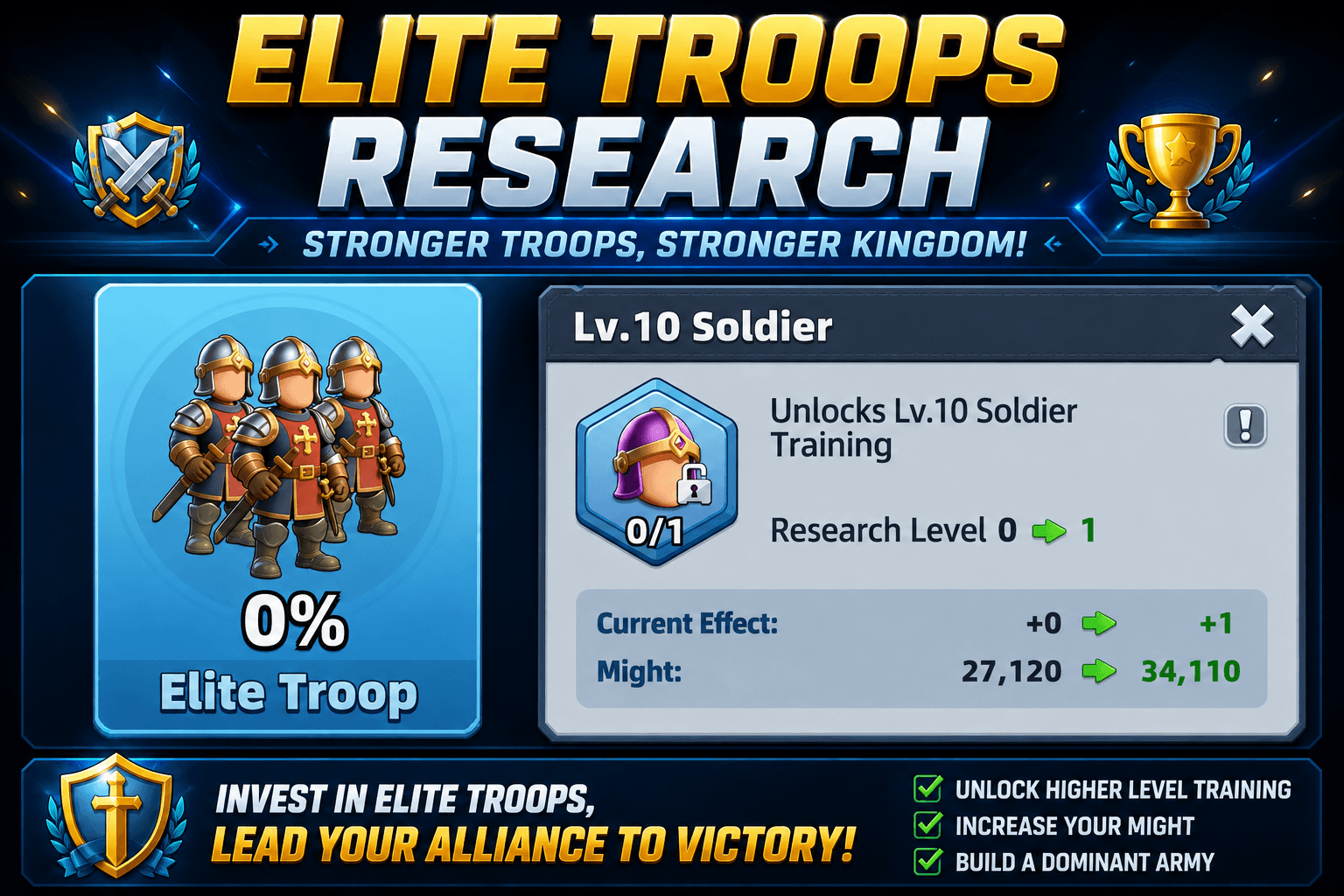 Last Asylum Elite Troop research — Lv.10 Soldier unlock gates Tier 10 troop training at Sanctuary 30
Every experienced player in the community agrees on this one: you must complete Elite Troop research to reach endgame.
The reason is simple. Tier 10 troops — the strongest in the game — cannot be trained without it. Not undertrained, not partially unlocked. You literally cannot queue them. It doesn't matter if your Sanctuary is Level 30; without Elite Troop research done, T10 doesn't exist for you.
Requirements to unlock T10 training:
- Sanctuary Level 30
- Elite Troop research fully completed
This takes a serious number of Study Scrolls. Which is why Alliance Duel research — which generates scrolls through better chest rewards — has to come first.
Caravan Transport — Useful, Not Urgent
Caravan Transport improves your Alliance trading caravans: more capacity per trip, faster travel, better protection from interception.
If you actively use the caravan system and your Alliance relies on resource trading, this tree has real value. If you're focused on growing your own account, treat it as low priority until the more impactful trees are done.
Offensive and Defensive Tactics — Late Game Power
These two trees were locked behind higher Research Lab levels in testing — they require a Sanctuary level most mid-game players haven't hit yet.
By their names and position in the research screen:
Offensive Tactics provides the deepest attack multipliers available through research. If you play aggressively — rallying capitals, attacking player cities, taking on bosses — this is where your late-game combat strength comes from.
Defensive Tactics is the mirror: the best defence multipliers in the system, for players who find themselves defending during Alliance wars more than attacking.
Plan ahead for these. Once they unlock, they become high priorities because the attack and defence percentage bonuses are larger than anything earlier in the tree.
What Order Should You Research?
Now that every tree is clear, here's the recommended sequence:
F2P Players
You have limited Study Scrolls and need every one to count.
- Development — Construction Master and Research Speed first. Then Training Ground unlocks.
- Alliance Duel — Super Reward Level 1 immediately, then Level 2. Do not skip this.
- Economy — Gathering speed branch. Unlock extra Herb Garden slots along the way.
- Hero tree — Match to your Squad 1 faction.
- Soldiers — Load Training first. Then attack or defence based on playstyle.
- Squad 1 tree — All three attack types.
- Elite Troop — Work steadily toward T10. Use the scrolls you've been earning from Alliance Duel.
- Squads 2 & 3 — Defence and HP.
- Offensive or Defensive Tactics — Once unlocked, prioritise based on your style.
- Caravan Transport — When you've covered the rest.
Paying Players
The same order applies. The difference is you can run two research queues simultaneously, which lets you advance two trees at once. A smart pairing: run Alliance Duel in queue 1 and Development in queue 2, then swap Development for Soldiers once the critical Alliance Duel nodes are done.
Know Your Playstyle Before You Spend
The priority list above covers the universal picks — the nodes that benefit every player regardless of how they play. Once those are done, the final shape of your research comes down to how you actually want to play the game.
| Playstyle | Research Focus After Core Unlocks |
|---|---|
| Aggressive PvP attacker | Soldiers (Attack) → Squad 1 → Offensive Tactics |
| Defensive / war supporter | Soldiers (Defence/HP) → Squads 2 & 3 → Defensive Tactics |
| F2P efficiency-focused | Alliance Duel → Elite Troop → Economy Gathering |
| Balanced all-rounder | Spread evenly after Alliance Duel and Development |
There's no wrong answer once the critical trees are handled. Offensive and defensive players will end up in different places on the tree — what matters is that you got there intentionally, not by clicking whatever was available first.
Quick Reference
| Tree | What It Does | Priority |
|---|---|---|
| Development | Build/train/research speed | High — start here |
| Alliance Duel | Unlocks event chest tiers | Critical — rush Super Rewards |
| Economy | Resources + Herb Garden slots | High |
| Hero | Faction stat buffs | High — match Squad 1 |
| Soldiers | Troop stats + march size | High — Load Training first |
| Squad 1 | Combat attack multipliers | High |
| Elite Troop | T10 troop unlock | Critical — long-term must |
| Squad 2 & 3 | Support squad defence | Medium |
| Offensive Tactics | Late-game attack multipliers | High when unlocked |
| Defensive Tactics | Late-game defence multipliers | Medium when unlocked |
| Squad 4 | Additional squad buffs | Low–Medium |
| Caravan Transport | Trade efficiency | Low |
The research system in Last Asylum: Plague rewards patience and planning more than raw spending. The players who struggle aren't always the ones with fewer scrolls — they're the ones who spent scrolls randomly and missed the Alliance Duel gate, or chased troop attack while their march size stayed small. Plan the order, hit the critical unlocks early, and let the compounding do its work.
Related Guides
- Fastest Way to Increase Power — where research fits in the full power priority list
- First 24 Hours Guide — unlock the Research Lab and Sanctuary early
- How to Level Up Heroes — match hero research to your main squad faction
- Gift Codes — free rewards, check after major updates
Watch the full research walkthrough on YouTube to see every tree inside the game.